6c. History of Regulation
The regulation of coal mining began in the 1930s when the detrimental effects of surface mining on the landscape and agriculture were noted in the 1930s. As high quality coal was discovered close to the surface in the Eastern United States, the amount of surface mining increased. In some areas, the discarded overburden contained acid-generating minerals, which washed with rainfall into bodies of water, killing vegetation and fish.
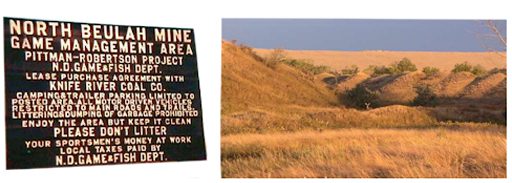
While the overburden in North Dakota doesn’t have any acid-generating material, early surface mining did render mined land unusable for agriculture or grazing. Mining companies created piles of overburden – known as orphan spoils – alongside coal fields. Today, there are about 14,000 acres of orphan spoils in ND. The Game and Fish Department manages much of the land for wildlife habitat and hunting. Because the orphan spoils are unstable and erode easily, the land will never be suitable for agricultural or grazing use again.
Today, the laws require mining companies save soil and return mined land to its original condition. This process is called reclamation.