
2c. Delta Environments & Coal Formation
From the geologic record, scientists know that low-lying land close to coastal areas can provide the right conditions for peat to form. The largest areas of modern peat formation are not far above sea-level, usually near river deltas and coastal barriers.
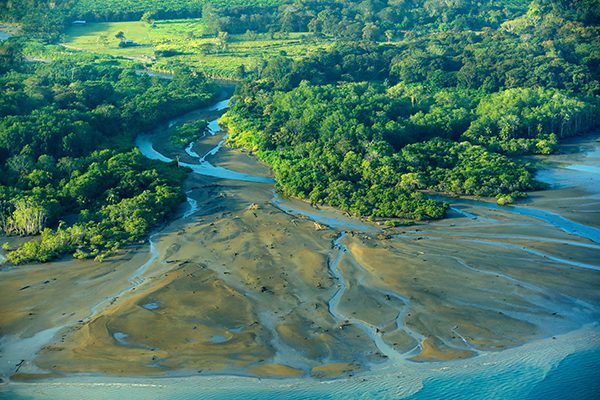
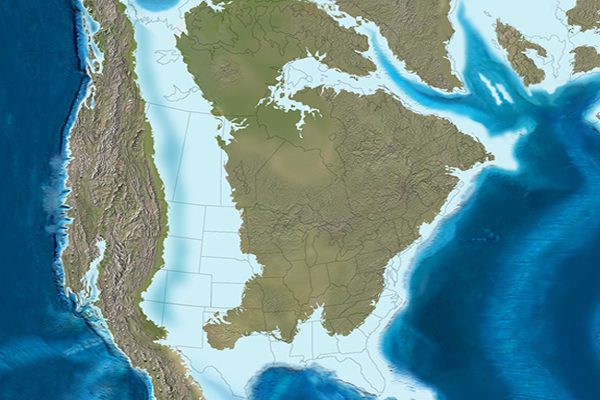
In the Late Cretaceous period, a shallow inland sea, known as the Western Interior Seaway, extended from Canada to Mexico. Peat formed along the coastal areas of this seaway. As the coasts of the sea withdrew, peat was deposited in western North Dakota. Over time, heat and pressure transformed those peat bogs to the lignite coal mined in the area today.